Blog
We write about what we learn building abacova, and about using it well. No growth hacks, no investment advice.
Subscribe by RSS-
Travel budget: how to work out what a trip costs and stick to it
How to build a travel budget block by block, how much margin to leave for surprises, how to track spending in another currency, and how to compare plan with reality when you're back.
-
Splitting costs with friends works better written down than remembered
Sharing costs with friends doesn't ruin friendships. Keeping them in your head does. How to record who paid what without anyone playing accountant.
-
Receipt scanner app: turn receipts into expenses without typing
How to scan receipts with your phone to record your expenses: what a receipt scanner reads, what you still decide, when to scan, and what to do with receipts that don't read well.
-
How to split expenses with friends fairly, and know who owes whom
How to split expenses with friends or flatmates: three fair ways to divide costs, why a running balance per person beats a list of receipts, and how to settle up.
-
A balance you can't explain is worse than no balance
When your number and the bank's disagree, you decide with the wrong one. Why it happens, and how reconciling once a month puts it right.
-
Automatic expense tracker: log Apple Pay payments with iPhone Shortcuts
Turn your iPhone into an automatic expense tracker: a Shortcuts automation fills in every Apple Pay payment for you. What it records, what it doesn't, how to set it up and its limits.
-
The 50/30/20 rule: what it is and how to apply it to your income
The 50/30/20 rule splits your take-home pay into needs, wants and savings. How to work it out step by step, a worked example, and when to adjust it.
-
Bank reconciliation: what it is and how to do it, step by step
What bank reconciliation is, how to do one step by step, a full worked example and the most common reasons your numbers don't match your bank's.
-
Cash flow forecast: how to see the months ahead before they arrive
What a cash flow forecast is, how to build a personal one in four steps, a month-by-month example and what to do when you spot a shortfall before it happens.
-
Double-entry bookkeeping explained, with everyday examples
What double-entry bookkeeping is, why every transaction is recorded twice, what debits and credits really mean, and four everyday examples worked through step by step.
-
Emergency fund: how much you need and how to build one
What an emergency fund is, how much it should hold, where to keep it, how to build it up gradually and when it's right to use it.
-
How to set up an expense tracker you will actually keep using
How to build a simple expense tracker in a spreadsheet: the columns you need, one formula to total by category, a monthly summary, and when you'll outgrow it.
-
How to choose the best expense tracker app for you
How to choose an expense tracker app: seven questions to ask before you install one, when a spreadsheet is enough, and a one-month test that makes the decision for you.
-
Fixed and variable expenses: what they are, examples and how to cut them
The difference between fixed and variable expenses at home, with examples, how to sort the unclear ones, and why the split helps you plan and save.
-
How much should I save each month? Work out your own number
How much should you save each month? A 20% starting point, how to adjust it to your expenses and goals, and how to build up to it if the numbers don't work yet.
-
Managing money as a couple: how to sort out your finances together
How to manage money as a couple: three ways to share expenses, a proportional split worked through, what to discuss first and a simple monthly review.
-
Net worth tracker: how to calculate yours and follow it over time
How to calculate your net worth and track it over time: the formula, what counts as an asset or a debt, a worked example and how often to update it.
-
Personal bookkeeping: how to keep your household accounts
What personal bookkeeping is and how to do it: what to record, a weekly and monthly routine, and how to check that your numbers match your bank.
-
What to do with your savings: the order that works
What to do with savings: a simple order for covering emergencies, clearing expensive debt, funding your goals and putting the rest to work for the long term.
-
One rule, for everything that comes in
Filing the same supermarket shop by hand every week is the chore that kills most budgets. How a rule settles it once, wherever the transaction comes from.
-
Ask your AI about your money, and let it answer with your own figures
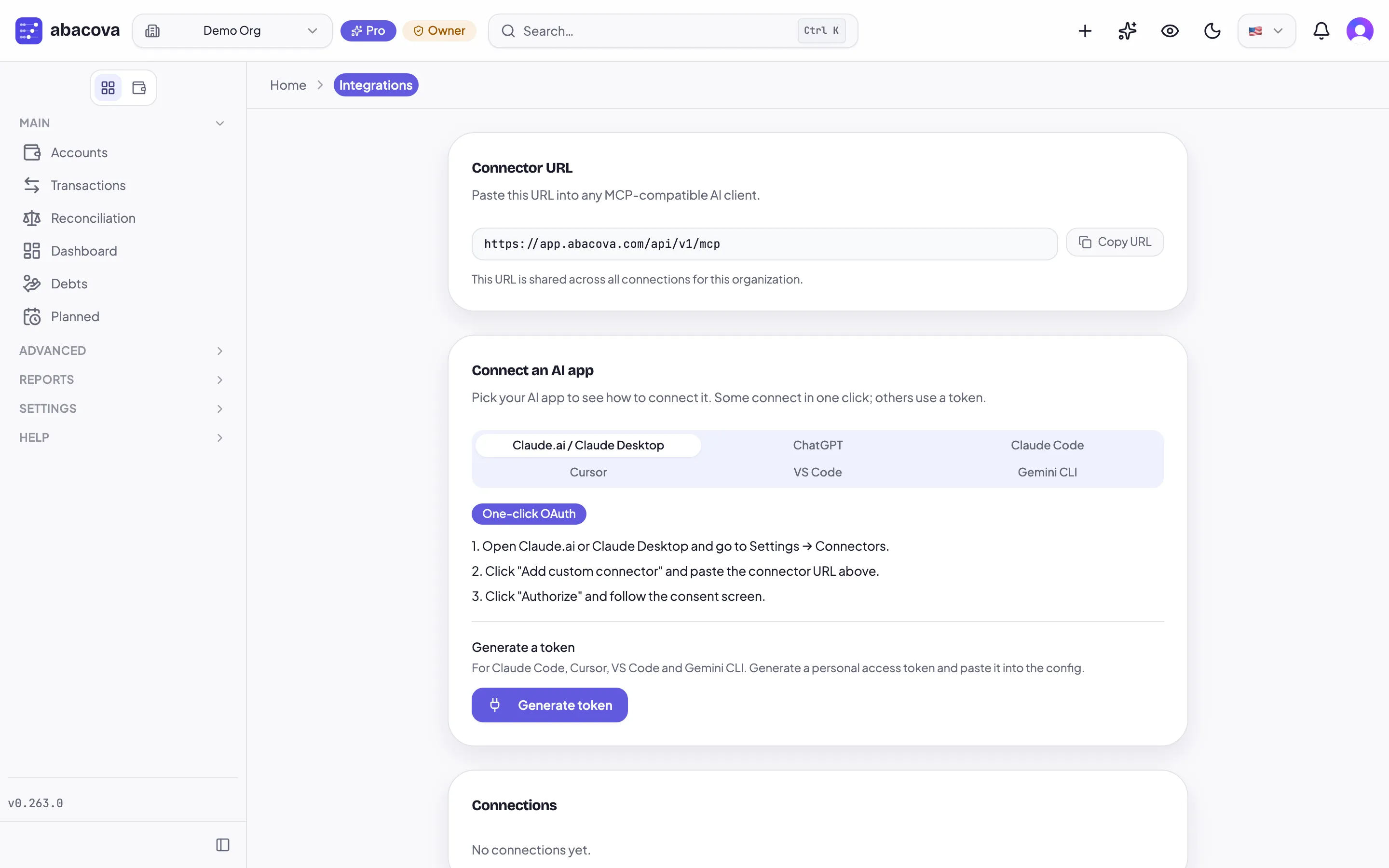
abacova's connector lets Claude, ChatGPT or your editor answer from your real balances, budgets and debts. Read-only, unless you decide otherwise.
-
"Trip to Rome" is not a category
A transaction has one category and as many tags as you like. Knowing which is which decides whether your numbers still compare a year from now.
-
A budget is an intention with a date on it and a number beside it
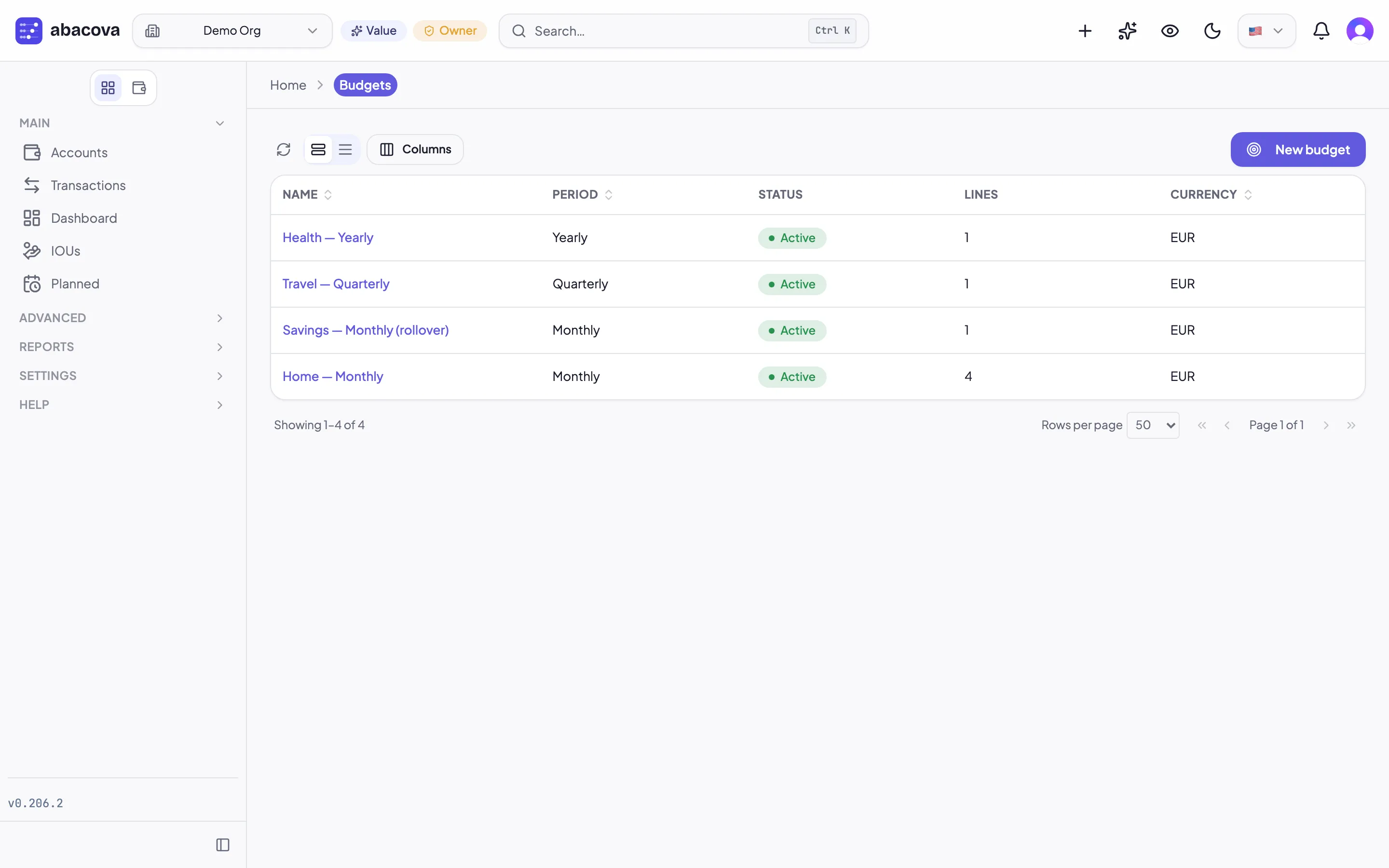
An amount, a period, and something to compare it against. The third part is the one people skip, and it's the part that turns a wish into information.
-
The four numbers worth checking once a month
You don't need twenty figures or a lost Sunday. Four numbers, checked monthly, say almost everything about how your money is doing.
-
Why abacova would rather ask than guess a category
A wrong rule applied silently doesn't fail visibly — it fails by accumulating. Asking costs a second.